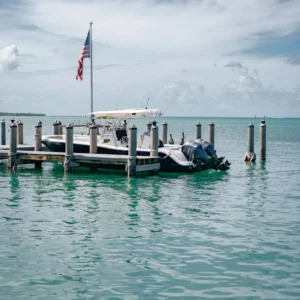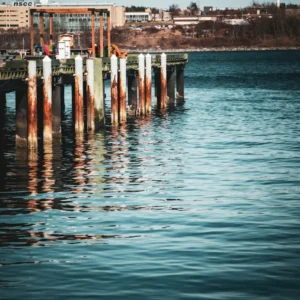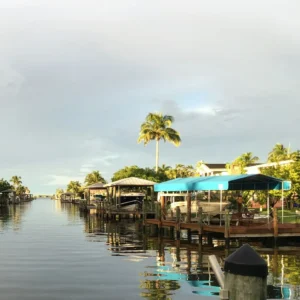

Pilings for a new dock on the Ortega River are driven until they reach firm bearing soil, not to a fixed number of feet. On most Ortega lots that means going well past the soft mud on the river bottom. Four things set the final depth: the soil layers under your dock, the water depth, the loads the dock will carry, and the piling material.
This post explains how a dock builder figures out piling depth on the Ortega, why the river bottom here makes it matter, and what you should ask about pilings before you sign. For the bigger picture, see our Ortega dock building page.
Why Does Piling Depth Matter So Much on the Ortega?
Because the top layer of a river bottom is the weakest part of it. Pilings that stop in soft sediment can settle, lean, or pull out under a loaded lift or a storm.
The St. Johns River system is unusual. Its riverbed sits below sea level for about 200 miles, according to the St. Johns River Water Management District, and the river moves slowly. Slow water drops fine sediment, and side creeks like the Ortega tend to collect it. That is why depth is set by what the piling meets, not by what looks like enough.
How Does a Builder Decide How Deep to Go?
By probing the bottom and then watching how each piling behaves as it goes in. The process looks like this:
- Probe first. At the site visit, a rod or test piling shows how deep the soft layer runs before firmer sand or clay.
- Set a design depth. The builder plans embedment based on the water depth, the deck height above water, and the loads, especially if a boat lift is going on.
- Drive to refusal or design depth. Pilings are typically driven or jetted until they stop moving easily or reach the planned embedment, whichever the design calls for.
- Adjust on the fly. If one piling sinks much easier than its neighbors, it goes deeper. Soft pockets are common in river bottoms.
Driving vs Jetting
These are the two common installation methods, and what follows is general guidance rather than a rule for every site. Driving hammers the piling in. Jetting uses water pressure to open a hole, and the piling settles into place. Builders often consider jetting gentler near older structures, while driving is often preferred where a piling needs to bear firmly in the soil. Some builds combine the two, jetting to start and driving to seat the piling. Which fits your lot depends on the soil, nearby structures and the design, so ask your builder which method they plan and why.
Which Pilings Carry the Most Load?
The pilings under a boat lift and at the end of the dock. A lift concentrates the weight of a boat on four points, and the terminal platform takes the most wave and wind load. These get deeper embedment and sometimes larger diameter than walkway pilings.
If you think you might add a lift later, tell the builder now. Upgrading pilings after the fact is the expensive way to do it. Our piling repair crews see the result of pilings that were sized for a walkway and then asked to carry a lift.
What Kind of Piling Is Right for the Ortega River?
Treated wood is the most common choice for residential docks, and the treatment level matters. The American Wood Protection Association rates ground-contact wood as Use Category 4 and marine use in salt or brackish water as Use Category 5. Pilings in the river need marine-rated treatment, not lumber meant for a backyard fence post.
Salinity on the lower St. Johns varies with tide and rainfall. The river is estuarine from downtown Jacksonville to Mayport, per the SJRWMD, and brackish water can push upstream in dry periods. That is enough reason to treat Ortega pilings as marine pilings.
Common Questions
How deep are dock pilings usually driven?
There is no single number. Pilings go until they reach firm soil or the design embedment for the loads they carry, which is often deeper than the water they stand in. On soft river bottoms like the Ortega, that can mean driving well past several feet of mud before the piling holds.
Can a dock settle if pilings are too shallow?
Yes. Shallow pilings can sink unevenly, which shows up as a sagging walkway, a tilted platform, or gaps at the shore connection. Fixing it later usually means adding or replacing pilings, so it is cheaper to get the depth right during the build.
Do I need different pilings for a boat lift?
Usually yes. Lift pilings carry the full weight of the boat on a few points, so they are often driven deeper and may be larger in diameter. Plan the lift with the dock so those pilings go in during the original build.
Will the builder test the river bottom first?
A good one will. Probing the bottom at the site visit shows how deep the soft layer goes along the Ortega River shoreline and helps set piling lengths before materials are ordered. Ask how they plan to check the soil on your lot and what they do if it runs deeper than expected.
Ask About Depth Before You Sign
Two bids can list the same number of pilings and still build very different docks. Ask each builder how deep they plan to go, how they will confirm it, and what they do when a piling drives soft.
We build docks along the Ortega River in Ortega and nearby Riverside and Avondale. Contact us to schedule a site visit, and we will probe your bottom before we price your pilings.