
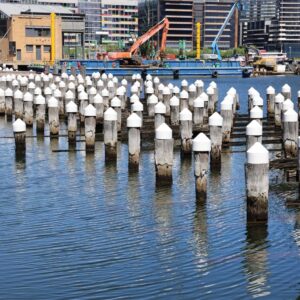
New dock construction in Ortega balances shoreline conditions, permit workflow, and how you plan to use the dock. The Ortega River’s salt-air corrosion and wake stress from passing boats put relentless pressure on decking fasteners, piling collars, and any hardware exposed to the water. Homes around Timuquana Country Club and throughout the Ortega neighborhood all face the same challenge. A dock builder in Ortega needs to understand these specific water conditions and choose materials and piling depths accordingly, not just install a generic structure.
Older docks often have good bones that support an upgrade instead of a rebuild. If you’re dealing with mature docks around Ortega, replacement often happens section by section rather than all at once. New construction work starts with a site assessment that determines piling depth based on the mud-line and tidal patterns. For the brackish tidal water conditions on Ortega River, boat lift installation and dock enhancement projects often include sea wall or bulkhead work to stabilize the shoreline. Pre-construction dock inspection can reveal hidden damage before you commit to a full rebuild, saving time and material costs.
We work with residential waterfront homeowners throughout the Ortega neighborhood, from established properties near the Ortega Bridge to newer construction where dock-building is part of the initial site development. Some properties are part of managed communities with HOA involvement in permit workflows, while others are private single-family docks. Familiar with Duval County shoreline permitting requirements and the timeline they impose, we source marine-grade materials that handle brackish tidal water with salt-air corrosion and boat wake stress conditions. We coordinate construction windows with hurricane season planning because June through November affects scheduling and material delivery in Northeast Florida.
Ready to move forward with dock construction or enhancement on Ortega River? Contact us for a free site consultation. We walk the property, understand your project goals, and outline realistic materials and timelines before providing any quote. No obligation, just honest assessment of what your dock build near Timuquana Country Club will actually require and when it can happen.
Building a new dock in Ortega starts with a site assessment of the mud-line depth, tidal patterns, and shoreline stability. Duval County permit requirements involve Florida DEP review for any shoreline work, and the process typically takes 4-8 weeks depending on project complexity. Once permits are approved, construction proceeds with piling installation, decking framing, and fastening, all sequenced around the brackish tidal water conditions on Ortega River. If your project includes a boat lift, seawall, or bulkhead work, those become integrated construction phases rather than separate projects.
The final scope of a dock build in Ortega depends on several factors: the size of the dock structure, the required piling depth determined by mud-line and tidal flow assessment, material selection for those conditions, and whether the project includes enhancements like boat lift installation or seawall reinforcement. Larger docks require more materials and longer construction timelines. Projects directly on Ortega River versus sheltered coves face different exposure conditions, which shapes both material grade and installation complexity.
Permit approval for dock construction in Duval County typically takes 4-8 weeks, depending on whether your project triggers additional environmental review. Once permits are in hand, a straightforward dock build usually runs 3-6 weeks, while projects that include piling replacement, boat lift installation, or seawall work extend the timeline to 8-12 weeks or longer. Northeast Florida hurricane season runs June through November, so scheduling becomes important. Many homeowners on Ortega River plan construction during winter and spring months to avoid that season and material delivery delays.
Material selection depends on your site assessment and project goals. For pilings on Ortega River, we evaluate pressure-treated timber versus concrete pilings based on the mud-line depth and tidal exposure. Decking options range from pressure-treated lumber to composite boards or hardwood, each with different durability profiles in these waterway characteristics. All fasteners and hardware must be marine-grade stainless or hot-dipped galvanized to withstand the salt-air environment. The walkthrough we conduct determines which combination makes sense for your specific dock location and use.
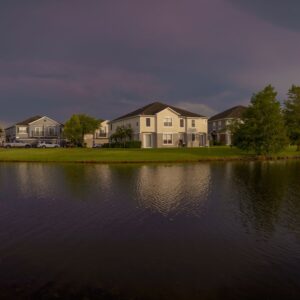
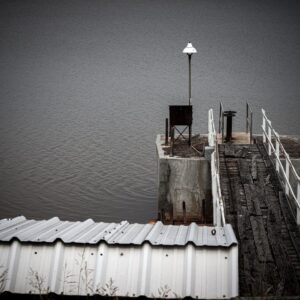
Building on Ortega River means understanding the unique pressures that brackish tidal water places on materials and fasteners. Every dock we construct on properties throughout the Ortega neighborhood starts with that site walkthrough and clear scope definition. We assess current conditions, discuss your expansion or replacement goals, and establish a realistic build timeline. Whether your project centers on the St. Johns River approach or sits directly on Ortega River, we start with clarity before construction begins.