
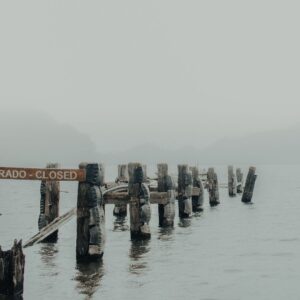
If your dock rocks when you walk across it, or if pilings look tilted since last storm season, the brackish tidal water of the Halifax River is likely at work underneath. Salt-air corrosion and boat wake stress wear fast on established docks around Sunrise Park and throughout Volusia County’s Halifax River frontage. Wooden pilings and fasteners don’t last as long here as in protected freshwater areas. Soft decking underfoot usually means moisture has penetrated the frame. Dock repair in Holly Hill starts with understanding what the Halifax River is actually doing to your structure. Most waterfront homeowners wait too long, letting a small issue become a seawall problem.
A leaning piling often signals wash-around below the mud line, which left alone eventually pulls the decking out of level. That’s when piling repair becomes urgent. Soft boards that feel spongy underfoot typically mean moisture reached the fasteners, and dock leveling may follow if settlement spreads unevenly. Along the Halifax River’s tidal swings and salt air, seawall and bulkhead caps crack from undermining, while boat lift motors and cables corrode faster than in freshwater. Cleaning and sealing slows the corrosion cycle if caught early. Most docks here fail from a combination of movement and moisture, not single events.
We work with residential homeowners, semi-private waterfront associations, and occasional commercial properties across Holly Hill and Volusia County. Most customers have established docks built 20-30 years ago or newer waterfront homes where enhancement work is expected. We understand Halifax River tidal permitting through Volusia County, and we source marine-grade materials built for brackish water with salt-air corrosion and boat wake stress. After hurricane season ends in November, we conduct post-storm damage assessments across properties from Riverfront Park to smaller private docks. Unlike generic contractors, we diagnose what actually failed: was it piling movement, fastener corrosion, or combined settlement? That focus on root cause drives our repair scope and materials choice.
If your Holly Hill dock has moved, cracked, or feels unstable, request a free assessment. We focus on diagnosing what’s actually wrong before we quote. Visit your Sunrise Park waterfront or anywhere along Halifax River in Volusia County. The difference between a preventive repair now and an expensive rebuild later often comes down to catching the right moment.
Look for pilings that lean or sag, soft or spongey decking underfoot, uneven settling after a storm, or bulkhead caps with visible cracks. Holly Hill’s Halifax River docks show these signs faster than elsewhere because brackish tidal water and salt air accelerate fastener corrosion. A piling tilted even a few degrees suggests wash-around below the mud line. Sections of decking that feel different when you walk across them usually mean the frame beneath has absorbed moisture. If any part of your dock moves when you walk, or if the water gap between deck and water line looks uneven, schedule an inspection.
Dock repair cost in Holly Hill depends on the type of damage, the number of pilings affected, the scope of decking or framing work, and the materials chosen. Repairs on Halifax River typically use marine-grade fasteners and pressure-treated or composite decking suited for brackish tidal water with salt-air corrosion and boat wake stress exposure. Boat lift or seawall components add scope. We assess each dock in person and outline the repair plan before quoting, so pricing reflects actual condition.
Holly Hill’s hurricane season runs June through November, so the best repair window is late winter or early spring. Pre-season inspections in April or May let you fix minor issues before summer boat traffic and storms. If your dock survived the last hurricane season intact, a post-storm assessment in December can catch damage you might not see. Don’t wait until Labor Day to realize a piling is failing. Volusia County weather doesn’t give docks much mercy, and delaying a repair from April to August can turn a simple fix into a structural problem. Early spring is ideal.
The answer depends on what’s actually wrong. If pilings are sound below the mud line, but decking and fasteners are compromised, repair usually makes sense. If the pilings themselves have rotted or shifted significantly, replacement might be the only reliable path. A structural assessment reveals the real cost: pulling up decking to inspect the frame, checking piling integrity below the waterline, and evaluating whether the bulkhead has settled. Many Holly Hill homeowners find that targeted repairs on key areas extend dock life another decade. We assess and recommend honestly, not based on what sells more jobs.

Holly Hill’s Halifax River docks age differently than most waterfront areas. Brackish tidal conditions and boat traffic stress older pilings and fasteners faster. We start every project by looking at what’s actually happening beneath the waterline and above the decking. Whether your Riverfront Park neighbors recommended us or you found us because something’s wrong, we treat assessment as the first step, not the upsell. Call or message when you’re ready to stop guessing.