
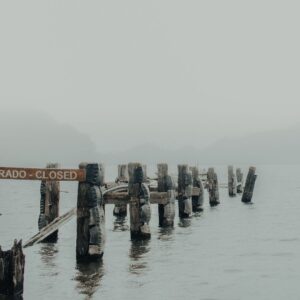
If your dock rocks when you walk across it, or pilings look leaned since the last storm, the Intracoastal Waterway’s brackish tidal water and salt-air corrosion are taking their toll. Neptune Beach homeowners often face piling rot, sinking sections, and soft decking from years of salt spray and boat wake stress. Around Beaches Town Center and North Beach, we regularly encounter mature docks where damage reaches the framing. Most problems develop slowly, becoming severe only when ignored. Dock repair in Neptune Beach means addressing the actual cause, not just surface fixes. Understanding how the water wears your structure is the first step toward lasting repairs.
A leaning piling often signals wash-around below the mud line, which if left alone eventually compromises decking and walkways. Piling repair addresses rot and instability caused by constant brackish tidal water exposure. Similarly, soft decking usually means fasteners have corroded, requiring boards to be replaced or reinforced. Dock leveling corrects settling that happens when pilings shift, while bulkhead repairs prevent undermining from boat wake stress and tidal scouring. Salt-air corrosion on the Intracoastal Waterway accelerates all of these failures. Cleaning and sealing slows decay, but it works best alongside structural repairs that address the root damage.
We serve residential waterfront homeowners, small commercial docks, and HOA-managed properties across Neptune Beach and Duval County. Many of our customers are dealing with mature docks that need piling replacement or structural reinforcement before hurricane season. We’re familiar with Duval County’s waterfront permitting requirements and use marine-grade materials engineered for brackish tidal water conditions with salt-air corrosion and boat wake stress. After Northeast Florida’s hurricane season runs from June through November, we often conduct damage assessments for homeowners assessing whether a dock can be salvaged or needs rebuilding. Property managers around Beaches Town Center rely on our diagnostic approach to keep aging docks safe and compliant.
Schedule a free assessment before hurricane season arrives. We’ll examine your deck, pilings, fasteners, and bulkhead to identify what’s actually wrong, then provide a clear picture of your repair options and costs. Neptune Beach docks in the North Beach area face unique stresses from boat traffic and tidal movement of the Intracoastal Waterway. Understanding the damage first means no surprises when we quote the work.
Look for a leaning or tilted piling, which often means the mud-line has eroded and the piling is no longer stable below water. Decking that feels soft or bouncy underfoot signals fastener corrosion. If your dock is settling unevenly or sinking on one side, a piling has likely shifted or failed. On the Intracoastal Waterway, salt-air corrosion accelerates decay, so even younger docks can show damage if exposed to brackish tidal water without proper sealing or protection. Any of these signs means the structural integrity is failing and repairs are worth considering soon.
The extent of damage below the mud line determines much of the cost. A single rotted piling costs less to replace than a full structural failure requiring multiple pilings. Material selection matters too: marine-grade lumber and fasteners engineered for brackish tidal water cost more than standard materials but last longer in Intracoastal Waterway conditions. Dock size, complexity, and whether you need permitting from Duval County also affect the quote. Labor intensity depends on how much framing work is needed and whether the deck can be saved.
Neptune Beach hurricane season runs June through November, so spring is the best window for repairs. March through May allows time to inspect pilings, assess damage from the previous season, and complete structural work before storm season returns. If your dock suffers storm damage in fall or winter, repairs in the off-season prevent further deterioration from salt spray and freeze-thaw cycles. Post-storm assessments are critical: damage that seems minor often goes deeper, and addressing it quickly prevents insurance claims from being denied. Summer repairs are possible but schedule early, before materials and crews get tight.
The decision depends on piling condition below the mud line and overall structural integrity. If one or two pilings are rotted but the rest are sound, repair makes sense. If pilings are failing across the dock or framing has spread beyond a few sections, a full replacement might be more cost-effective. Decking alone can usually be replaced affordably, but if it’s hiding deeper frame damage, addressing the skeleton first prevents future patching. This is why a thorough inspection comes before any estimate. We assess what can be salvaged and what needs to go.

Whether your dock is showing age or you’re concerned about storm damage, the first step is a thorough inspection. Neptune Beach dock repair starts with understanding the actual damage. We assess your specific situation, explain what we find, and recommend repairs that make sense for your waterfront. Homeowners near Beaches Town Center and across Duval County trust our diagnostic approach because it cuts through guesswork. Reach out to discuss your condition and get a clear assessment of what needs attention before hurricane season.