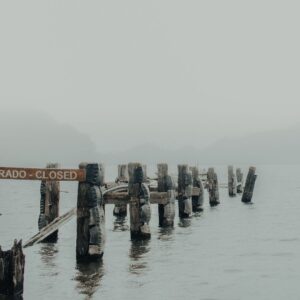
If your dock rocks when you walk across it, or if pilings look leaned since the last storm season, the brackish tidal water of the Nassau River is likely at work. Salt-air corrosion and boat wake stress wear at pilings, fasteners, and decking faster in exposed tidal settings. Around Lofton Creek and the broader Nassau River area, properties in Nassauville need regular inspection and targeted dock repair to stay level and safe. Wide shallow shorelines common to rural waterfront properties here mean floating sections often outlast fixed-height designs when structural settlement begins.
A leaning piling often signals wash-around below the mud line, which if ignored eventually pulls the decking out of level. In brackish tidal water with constant salt-air corrosion and boat wake stress, pilings settle unevenly. Addressing piling repair early prevents the cascade of secondary damage. Soft, spongy decking usually means moisture has reached fasteners underneath, or rotting has begun in the frame. Dock leveling and sea wall or bulkhead work restore structural integrity, while regular cleaning and sealing slows the corrosion cycle that is relentless in Nassauville’s tidal environment.
We work with residential waterfront homeowners who have had the same dock for decades, properties that need structural refurbishment more often than replacement. We also work with commercial and HOA-managed waterfront along the Nassau River, where compliance and predictability matter. Familiar with Nassau County waterfront permitting and the specific demands of brackish tidal water with salt-air corrosion and boat wake stress, we specify marine-grade materials built to last in these conditions. After Northeast Florida storm seasons, we conduct damage assessments and prioritize repairs that restore function without unnecessary replacement. Whether near Yulee or closer to central Nassauville, we take the time to assess what’s actually wrong.
Call for a free dock assessment in Nassauville. We inspect pilings, decking, fasteners, and structural alignment, then tell you exactly what’s wrong and why. No vague estimates, no unnecessary upselling. If your dock is near Lofton Creek or anywhere along the Nassau River, we’ll schedule a time that works. Identifying damage early keeps repair costs predictable and prevents safety hazards.
Leaning pilings signal wash-around below the mud line. Soft, spongy decking means fasteners underneath are rusting or frame wood has begun to rot. Sections that sink after rain or heavy boat traffic point to piling settlement in brackish tidal water. Bulkhead or seawall that leans away from land, or gaps opening between cap and pilings, show undermining or structural shift. Any of these in Nassau County’s salt-air environment warrant immediate inspection.
Damage type matters most. Replacing rotten pilings costs more than re-fastening loose deck boards. Dock size and material determine how much marine-grade lumber or hardware you need. Accessibility can affect labor, especially if your dock is in a tight inlet or marshy area. Brackish tidal water with salt-air corrosion and boat wake stress in Nassau County means premium materials and finishes that resist long-term deterioration. We assess scope first, then detail what drives the work.
Late spring, before June, is ideal. Northeast Florida hurricane season runs June through November, so structural repairs done before then give you a secure dock through the storms. Post-season damage assessments, usually in December, reveal hidden wear that intensified under storm stress. Spring gives time to plan and order marine-grade materials without rush shipping. Year-round inspections, though, catch small problems before they cascade. Don’t wait until a storm has passed or a family outing is planned.
It depends on what’s actually broken. If pilings below the mud line are sound and framing is intact, repair almost always wins. Rotten decking can be replaced without touching pilings. A few compromised fasteners can be re-driven or upgraded without removing the whole structure. But if pilings are severely corroded or split, or if the frame has rotted through, replacement makes sense. We inspect carefully, measure what’s salvageable, and tell you which path is right for your dock.


Reach out when something doesn’t feel right. Soft pilings, uneven surfaces, creaking frames, or sections that move too much are all signals to get an inspection. We assess Nassauville waterfront structures along the Nassau River and Lofton Creek area, then build a clear plan based on what we actually find. Marine-grade repair isn’t guesswork. Contact Docks MD to discuss what’s happening with your dock and what it will take to fix it.