
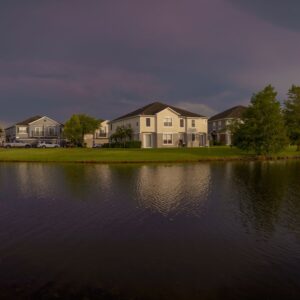

If your dock rocks when you walk across it, or if pilings look tilted since the last season, the Matanzas River is at work. These waters run brackish with strong tidal flows that stress pilings and accelerate salt-air corrosion, especially around Fort Matanzas National Monument and the inlet’s narrower passages. Boards that feel soft underfoot usually mean moisture has penetrated the fasteners underneath. A leaning piling often signals wash-around below the mud line. This is why dock repair in Matanzas Inlet, FL tends to focus on foundation integrity first. The longer you wait, the faster structural problems spread through the decking.
A leaning piling often signals wash-around below the mud line, which if left unaddressed pulls the entire deck out of level. The strong tidal flows around Matanzas Inlet accelerate this process. Decking that sinks on one end points to piling settlement, typically caused by the brackish tidal water eating at the pilings’ lower sections where erosion is hardest to spot. Piling repair addresses the foundation directly. Dock leveling corrects the heave and settling. Sea wall and bulkhead work prevents undermining from boat wash and tidal scour. Cleaning and sealing slows salt corrosion on exposed decking. Each repair type treats a different failure point that Matanzas River conditions create.
We work on the older established docks and private waterfront in St. Johns County. Many properties around Matanzas Inlet and toward Rattlesnake Island are rural estates with longer dock runs. Homeowners here need someone familiar with St. Johns County waterfront permitting and the challenges of brackish tidal water with salt-air corrosion. We specify marine-grade materials rated for these conditions and assess the foundation before quoting work. After nor’easters and hurricane season, we often handle post-storm damage assessments. Whether your property is near the inlet or back along the river, we understand rural waterfront repair differently than contractors in developed shoreline areas.
Don’t wait for a failure to become structural collapse. A free assessment of your Matanzas Inlet dock catches problems early, especially around Rattlesnake Island where seasonal storm surge compounds wear-and-tear. We examine the pilings below the waterline, check the fasteners underneath the deck, and assess the bulkhead if you have one. Then you get a clear picture of what’s actually wrong before we quote repairs.
Look for a dock that rocks when you walk across it, or pilings that lean noticeably from vertical. Boards that feel soft or spongy underfoot usually mean the fasteners underneath have corroded from brackish tidal water exposure. A section of decking that has sunk lower than the rest signals piling settlement, often caused by wash-around erosion below the mud line. Bulkheads that show horizontal cracks or lean suggest undermining from boat wake and tidal scour. Any of these conditions warrant assessment before the problem spreads into the framing.
The scope of damage drives cost more than anything else. A single leaning piling is cheaper to stabilize than extensive wash-around that affects multiple pilings. Your dock size matters, larger structures requiring more materials and labor. The materials themselves vary: marine-grade wood, composite, or concrete have different price points for St. Johns County’s brackish tidal water conditions. Salt-air corrosion and boat wake stress accelerate deterioration, so older docks exposed to these conditions longer often need more foundational work. Finally, accessibility on the Matanzas River affects how we can approach the work.
Late spring into early summer, before Northeast Florida’s hurricane season peaks in September and October, is ideal. This timing lets you address damage from winter and spring storm activity before the heavy weather arrives. If a dock shows damage after a nor’easter or strong storm, we recommend post-storm assessment quickly, because ongoing exposure accelerates deterioration. Fall and winter repairs are possible, but water levels and weather unpredictability around Matanzas Inlet can complicate the work. Spring gives the best window: mild weather, lower water, and time to finish before the next season’s stresses.
Start with an assessment of the pilings below the mud line, which is the hardest part to inspect without diving in. If pilings are sound but the decking and framing have deteriorated, repair often makes sense. If pilings show rot, significant cracking, or wash-around that has undercut the structure, replacement may be unavoidable. Your dock’s age, material type, and the extent of salt-air corrosion from Matanzas River conditions all factor in. Sometimes a hybrid approach works: stabilize the foundation with new pilings, then refresh the decking. The diagnostic assessment clarifies which path is cost-effective.
The first step is understanding what your dock needs, not jumping to a quote. We assess pilings, framing, decking, and the shoreline around Matanzas Inlet to diagnose where the problems started. St. Johns County waterfront permitting and the specific stresses of brackish tidal water with boat wake damage require a tailored approach. Call or email us to book a walk-through of your property. We’ll identify what’s failing and explain the best path forward clearly.