
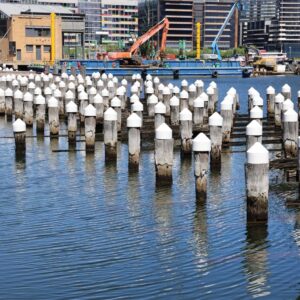

Before any deposit changes hands on a Palm Coast dock project, the site should be walked and the scope written clearly. Full saltwater with heavy tidal current and salt-air corrosion means material choice and piling depth determine how long your dock lasts. Homes around Hammock Beach Resort and other established Palm Coast neighborhoods often have docks that show their age, with seawall undermining and wood rot from persistent salt exposure. A dock builder in Palm Coast, FL approaches each project by first assessing what the canal system’s tidal character and current conditions demand.
A dock enhancement can extend an existing structure, add a boat lift with new pilings, or replace deteriorated decking in phases. New construction on the Saltwater Canal System typically involves piling assessment to determine depth in the mud line, material selection for salt-air corrosion resistance, and decking that withstands heavy tidal current. Sea wall and bulkhead work often runs alongside dock construction, since full saltwater exposure undermines many seawalls in Flagler County waterfront homes. Dock inspection services before purchase and storm readiness planning before hurricane season help secure your waterfront investment.
We work with residential waterfront homeowners throughout the Saltwater Canal System, from established neighborhoods near Hammock Beach Resort to newer builds where fresh dock construction is part of the property’s foundation. Some projects involve HOA-managed waterfront where coordination matters, and others are private single-family docks. Familiar with Flagler County shoreline permitting, we know the dock inspection and DEP submission workflow and what documentation Flagler County reviewers expect. Marine-grade materials for full saltwater with heavy tidal current and salt-air corrosion conditions are non-negotiable. Coordinated schedules respect hurricane-season planning so major dock work happens outside June through November when possible.
Contact us for a free consultation on your Palm Coast dock project. Whether you’re looking at new construction near the Saltwater Canal System, a replacement on existing pilings, or an enhancement, we walk the site, review your project goals, and outline realistic materials and timelines before quoting anything. A site assessment answers questions about water depth, tidal patterns, and what the Saltwater Canal System’s conditions demand of your dock structure.
Building a new dock on the Saltwater Canal System starts with a site assessment to determine mud line depth, current patterns, and tidal range. Flagler County and Florida DEP shoreline permitting comes next, and documentation depends on whether your property is on a navigable waterway or within a canal community. Piling installation, decking, and any boat lift or seawall work follow permit approval. Full saltwater with heavy tidal current and salt-air corrosion means material selection happens early in the design phase to ensure the dock structure withstands the environment for decades.
Dock construction costs depend on several project-specific factors. Dock size and the piling depth required by the Saltwater Canal System’s mud line conditions affect material volume. Material choices for pilings (pressure-treated wood versus concrete) and decking (composite, pressure-treated wood, or hardwood) vary based on salt-air corrosion exposure and your maintenance preferences. Whether the project includes a boat lift, seawall work, or storm readiness upgrades adds scope. Flagler County permit complexity and project timeline also influence the final cost, so site assessment comes before any detailed quote.
Dock construction timelines on the Saltwater Canal System depend on project complexity and permit approval. Flagler County shoreline permitting typically takes four to eight weeks, though that varies based on whether major bulkhead or seawall work is involved. Build time for a straightforward dock replacement runs two to four weeks once permits are in hand. New construction with pilings and a boat lift can take six to eight weeks. Northeast Florida hurricane season runs June through November, so scheduling major work between December and May helps avoid disruption and permits crews to work without seasonal constraints.
Material selection for Palm Coast docks accounts for those conditions. Pilings are typically pressure-treated wood, concrete, or composite, each offering different durability and cost profiles in the Saltwater Canal System environment. Decking can be pressure-treated wood, composite, or hardwood depending on maintenance preference and salt exposure intensity. Hardware, fasteners, and connectors must be marine-grade stainless steel to resist corrosion. Site assessment determines which material combination suits your dock’s specific location within the Flagler County canal system, your maintenance capacity, and how long you plan to own the property.
Ready to build or upgrade your Palm Coast waterfront dock? Reach out to discuss your project scope. We assess the site first, walk through material choices suited to the Saltwater Canal System’s tidal character and salt-air environment, and provide a clear timeline before any commitment. Whether your dock is on a quiet residential canal near Matanzas River or a busier waterway, the approach is the same: understand the conditions, plan accordingly, build to last.